Education, Reimagined: The Spectrum way

Written By: Keeron Isaac
In collaboration with Dr Patrice Rabathaly
As April, Autism Month, draws to a close, two voices from the classroom, one shaped by daily teaching and the other by lived experience, are rethinking how Trinidad and Tobago understands education, inclusion, and what it really means to support neurodivergent children.
For me (Isaac), as an educator at Spectrum Academy, and for Dr Patrice Rabathaly, its lead advocate, a late-diagnosed autistic woman and mother to an autistic son, this work is not theoretical. It is not seasonal. It is personal, urgent, and ongoing.
It is about more than awareness. It is about action.
“We Teach Differently Because They Learn Differently”
Since stepping into my role as a STEM and ELA educator at Spectrum Academy, I’ve had to rethink almost everything I thought I knew about teaching.
When I was asked by FIASCO Mag to reflect on what I’ve learned, and what people often misunderstand about autism, I realised there isn’t a simple answer. It can’t be reduced to a checklist or definition. It’s a shift in mindset.
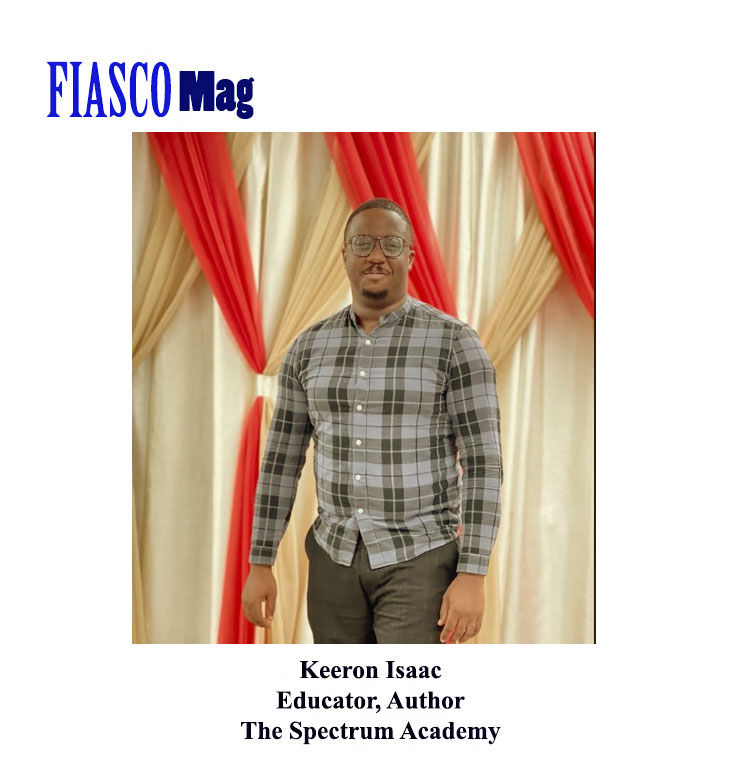
At its core, it means recognising that education must adapt to the student, not the other way around.
At Spectrum, we don’t rely on rigid, traditional systems. Our classrooms are sensory-based and intentionally designed to meet students where they are. Learning isn’t confined to textbooks or lectures. It’s built, explored, and experienced.
I, we teach coral reefs by building them. Students engage with textures, structures, entire ecosystems. They explore mangrove conservation through hands-on models that break down complexity into something tangible. Volcanic activity becomes a controlled eruption in the classroom, turning theory into something they can see, feel, and remember.
Every lesson becomes a project. Every concept becomes something students can shape and understand on their own terms. The reality is simple: no two students learn the same way.
In a single classroom, I might teach one concept in three or four different ways at once. One student processes best through sound, so I explain and repeat aloud. Another needs visuals, videos, diagrams, demonstrations. Others interpret through drawing, flow charts, or physical models.
It demands constant adjustment, constant awareness, and a willingness to let go of the idea that there is one “correct” way to teach. It also means understanding that learning cannot happen without regulation.
Every 20 minutes, students are given space to reset. These sensory breaks might involve puzzles, movement, tactile activities, or quiet time. To an outsider, it may look like disruption. In reality, it’s what makes learning possible. It allows students to return focused, ready, and able to engage.
And it works.
The growth I’ve witnessed is undeniable. At our first end-of-semester parent-teacher meeting and award ceremony, the feedback from parents was overwhelmingly positive. But more importantly, you can see the difference in the students: their confidence, the way they carry themselves, the milestones they reach.
For many of them, this is the first time they’re being taught in a way that actually understands them. Yet even now, I hear the same thing from new parents:“We didn’t know this existed.”
They didn’t know secondary-level programmes for neurodivergent students were available. They didn’t know there was a space where their children could be supported, challenged, and celebrated.
Autism is not a month. It is not a campaign. It is a lived reality, one that calls for inclusive education systems, supportive communities, and a commitment to equity that goes far beyond conversation.
“I Didn’t Get My Diagnosis Until Adulthood”
For Dr Patrice Rabathaly, that reality is deeply personal.
“I didn’t get my autism diagnosis until adulthood. By then, I had spent decades translating myself for a world that wasn’t built with me in mind—masking, overcompensating, wondering why ‘normal’ felt like a second language I could speak but never think in.”
Her experience reflects that of many late-diagnosed individuals: years spent adapting to systems that never accounted for how they naturally think, feel, or process the world.
Everything shifted when she became a mother.
“My son is autistic too. Watching him move through early childhood was like holding up a mirror, with better lighting. I saw his brilliance, his sensory reality, his need for systems that bend instead of break him.”
Through him, she saw both possibility and failure: possibility in who he is and failure in a system meant to support him.
“I saw the gaps. The waitlists. The classrooms where ‘inclusion’ meant a seat in the back, not a voice at the table. The meetings where potential was measured by how well he could appear non-autistic for six hours a day.”
That contradiction became impossible to ignore.
“So we built something.”

A Different Model of Education
Spectrum Academy wasn’t created as an alternative. It was created as a response. The Academy is new, but she says it’s built on an old truth: neurodivergent children don’t need to be fixed.
"They need to be understood, challenged, and equipped.”
Its foundation is simple, but it changes everything.
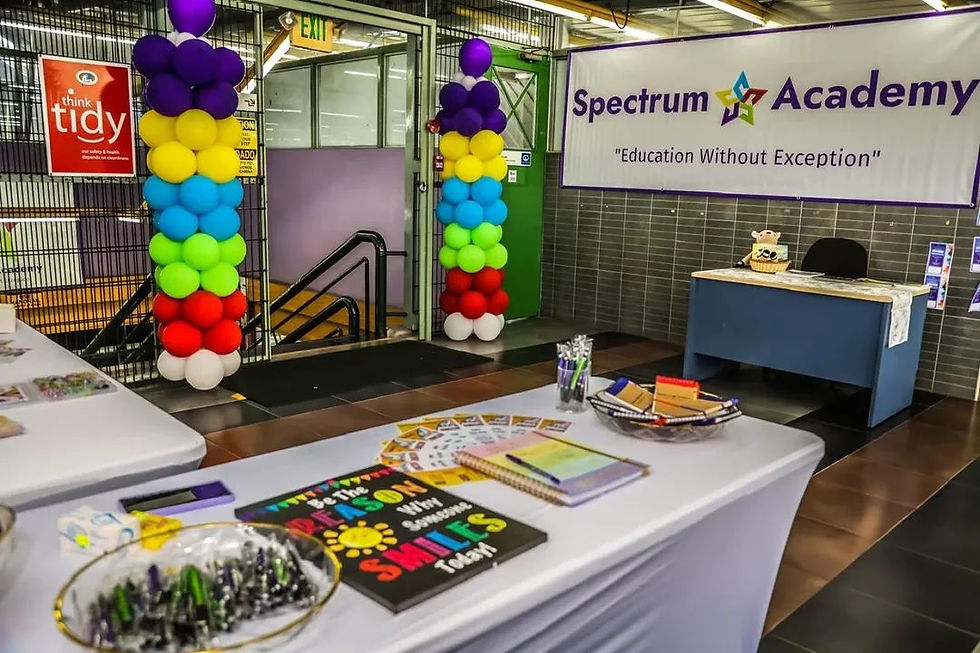
Regulation comes before education because a dysregulated brain cannot learn. Strengths guide the curriculum, not deficits. Students are taught through their interests, not around them.
Communication is respected in all its forms, spoken, typed, signed, or supported through assistive technology. Executive function is developed with patience and structure, not punishment.
Success is measured differently.
“We measure success by growth, by joy, by self-determination, not by how well a child hides their autism.” For Rabathaly, this is more than philosophy. It’s a refusal to let another generation go through what she did.
“I’ve lived the cost of delay, the burnout, the mental health toll, the years lost. I refuse to let another generation pay that price while we debate whether they’re worth the investment.”
Her message extends beyond the classroom.
“Neurodivergent-inclusive education is not charity. It is infrastructure.”
She calls on policymakers, funders, and decision-makers to treat it that way: invest in sensory-informed classrooms, train educators in neurodiversity-affirming practices, and ensure schools are staffed with people who understand neurodivergent needs.
She also stresses the importance of lived experience in shaping policy.
“Nothing about us, without us.”
For too long, decisions have been made without the voices of those directly affected. That has to change.
“I didn’t build Spectrum to create a bubble. I built it to create a blueprint.”
A model that shows what’s possible when systems are designed with neurodivergent individuals in mind, not as an afterthought, but from the start. Because when education becomes more flexible, inclusive, and responsive, it doesn’t just benefit one group of students. It benefits all of them.
“‘Leave no child behind’ has been a slogan for years. It’s time we make it a standard.”
Back in the classroom, Rabathaly sees the impact of this philosophy every day. Students who were once overlooked are now thriving. Voices once dismissed are now leading. Potential once questioned is now undeniable.
For her, the journey has changed me. It has forced her to rethink what education should look like and who it should serve.
“The truth is, the next generation is already here. They are not waiting to be fixed but to be understood. The question is no longer whether they are capable, it’s whether we are ready to meet them where they are,” she concludes.


Comments